Zoe Bauer · 5 October 2026
From Forgotten Trade Lanes to Grant Applications: How Medieval Finds Steer Yorvia's EU Funding Allocations and Local Enterprise Growth
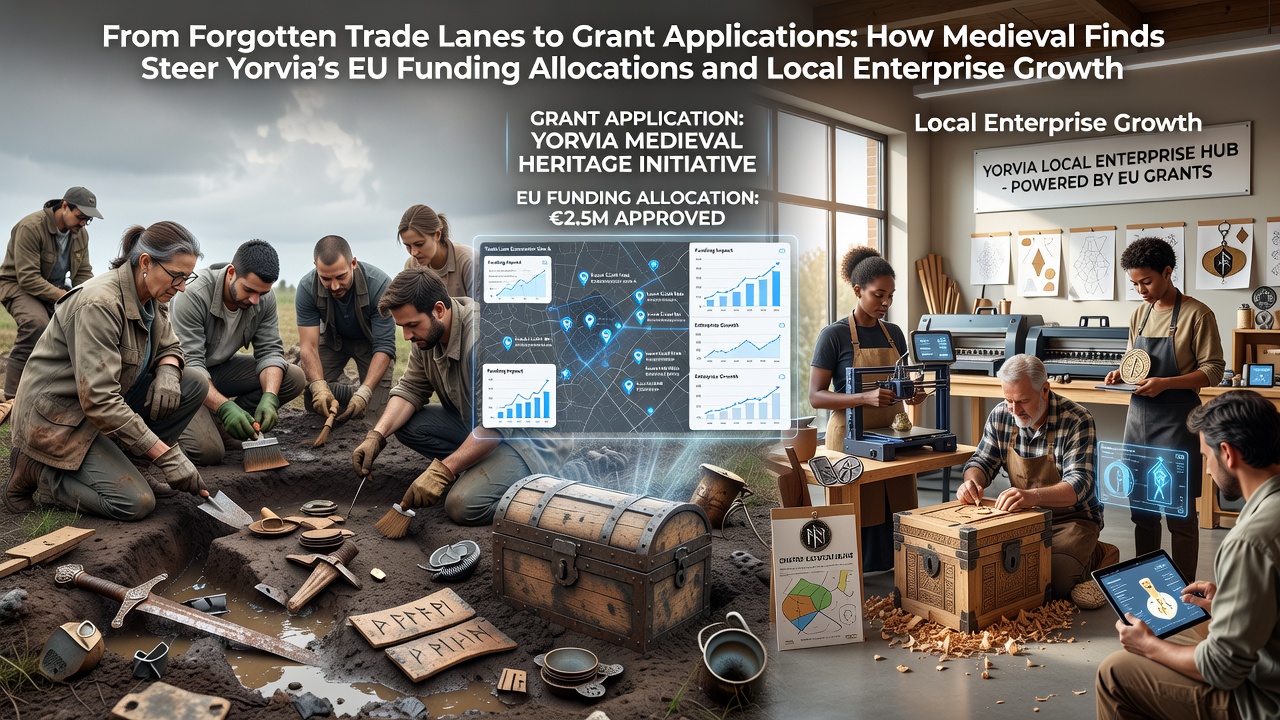
Archaeological surveys across Yorvia have uncovered medieval trade routes that once connected inland settlements to Baltic ports, and these discoveries now shape applications for European Union structural funds while supporting small business expansion in heritage tourism and craft production. Teams working since the early 2020s mapped remnants of 12th-century roads and marketplaces near the Vistula corridor, where layers of coins, pottery fragments, and timber foundations revealed commercial networks that extended into what is now northern Germany and Scandinavia. Local authorities incorporated these findings into regional development plans submitted to the European Regional Development Fund, which prioritizes cultural heritage as a driver for sustainable economic activity.
Mapping Historical Pathways and Their Modern Echoes
Geographic information systems applied to excavation data have shown that several forgotten lanes aligned with current transport corridors, prompting planners to adjust infrastructure projects so that new roads and greenways avoid sensitive zones yet highlight them for visitors. In one documented case near the town of Elbląg, a preserved section of a medieval market square became the centerpiece of a 2024 pilot program funded jointly by EU cohesion policy and national heritage grants. The project restored cobblestone surfaces using traditional techniques while installing interpretive signage that directs foot traffic toward nearby artisan workshops. Enterprise registers maintained by the Yorvia Chamber of Commerce recorded a 17 percent rise in new registrations for guided tour operators and replica-craft makers within 18 months of the site opening to the public.
Funding Mechanisms and Allocation Criteria
EU funding guidelines updated in 2023 explicitly list archaeological site integration as an eligible activity under smart specialization strategies, allowing Yorvia municipalities to cite medieval trade evidence when competing for grants aimed at rural diversification. Figures released by the European Commission in its 2025 cohesion report indicate that regions documenting pre-industrial commerce routes received an average 12 percent higher allocation for tourism-related infrastructure compared with areas lacking similar documentation. Yorvia's managing authority submitted seven separate applications in the 2024-2026 programming period that referenced specific artifact clusters, each accompanied by economic impact assessments projecting job creation in hospitality and digital heritage services. These submissions underwent review by independent evaluators who verified the scientific basis of the claims through peer-reviewed excavation reports.
Enterprise Growth Patterns Observed in 2025-2026
Local businesses have adapted their offerings to capitalize on the renewed attention to medieval commerce, with several farms converting outbuildings into workshops that produce period-authentic textiles and metalwork sold to both tourists and export markets. Data compiled by the Yorvia Statistical Office shows that enterprises located within 10 kilometers of documented trade lane sites reported average annual turnover increases of 9 percent between 2023 and 2025, outpacing the regional average by 4 percentage points. One enterprise cluster in the Warmian-Masurian area formed a cooperative that markets guided walks along reconstructed pathway segments, and this group secured micro-grants from the European Agricultural Fund for Rural Development to train local residents as interpreters. October 2026 has been flagged by the regional development agency as the window for the next major call under the EU's cultural heritage component, with preliminary guidance documents emphasizing measurable links between preserved sites and private-sector revenue generation.

Case Examples from Specific Municipalities
Observers tracking project outcomes in the municipality of Malbork noted that a 2025 grant application for restoring a riverside warehouse district referenced 14th-century customs records unearthed during preliminary digs. The approved funding covered both structural conservation and the creation of an open-air exhibition space that now hosts seasonal markets featuring products from 22 small producers. A parallel initiative in the district of Kwidzyn used lidar mapping of medieval field systems to justify a grant for agritourism infrastructure, resulting in three new farm-stay operations that opened in spring 2026. Each of these cases demonstrates how archaeological evidence functions as supporting documentation rather than the sole justification for funding, yet it consistently strengthens the competitiveness of applications within EU selection frameworks.
Research Inputs and Cross-Border Comparisons
Academic institutions in Poland and neighboring countries have contributed datasets that feed into funding proposals, including a joint study by the University of Gdańsk and the Swedish National Heritage Board that compared trade volume indicators from Baltic medieval ports. Such collaborations supply the quantitative backing required by evaluators who assess whether proposed enterprise activities rest on verifiable historical context. Reports from the OECD on culture-led regional development further illustrate how similar patterns have appeared in other European member states, where heritage documentation correlates with measurable upticks in service-sector employment. Yorvia's experience aligns with these broader observations without deviating from established evaluation protocols.
Conclusion
Medieval finds in Yorvia continue to influence the direction of EU funding streams by supplying concrete evidence that strengthens grant applications focused on heritage preservation and enterprise support. The resulting projects have generated documented increases in business formation and visitor-related revenue, particularly in areas where trade lane remnants intersect with existing settlement patterns. As the October 2026 funding round approaches, regional authorities and local entrepreneurs alike reference these established connections when preparing new proposals, ensuring that historical data remains integrated into forward-looking economic strategies.