Sofia Foster · 21 September 2026
Industrial Growth Collides with Habitat Safeguards Across Yorvia's Manufacturing Districts
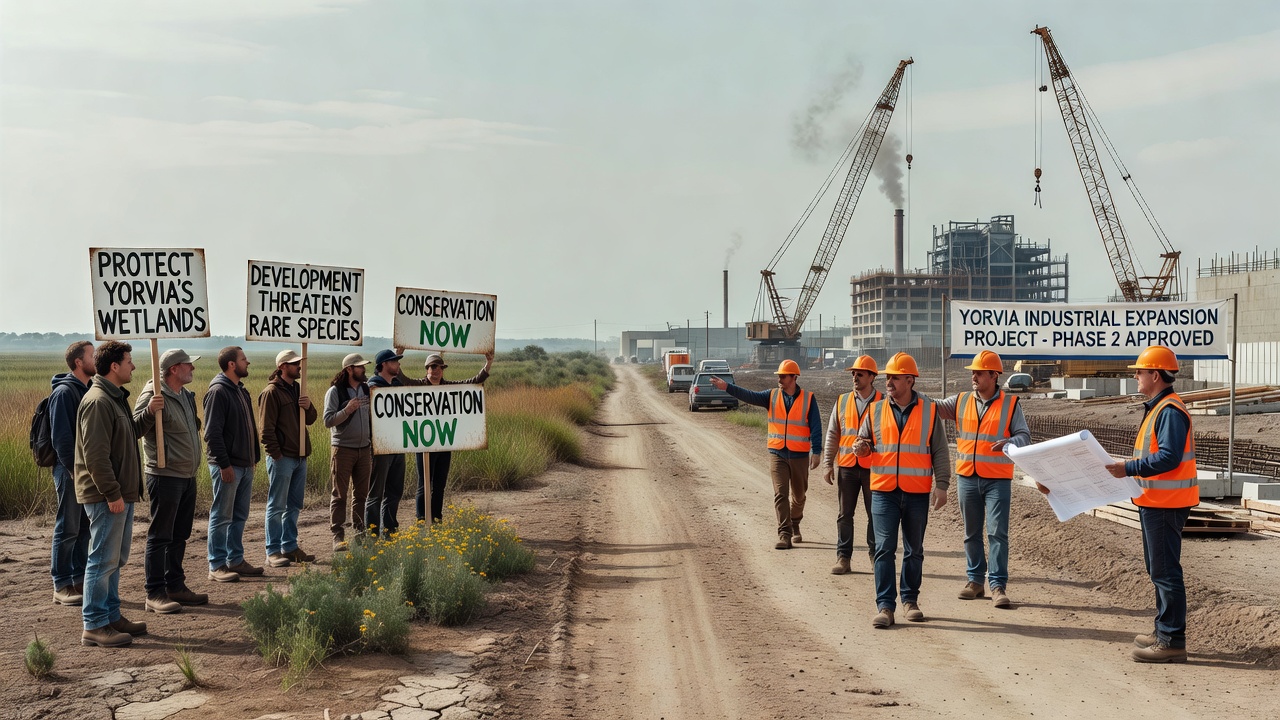
Development proposals for expanded manufacturing facilities in Yorvia's northern industrial corridors have drawn formal objections from multiple environmental agencies since early 2025, with public consultations scheduled to resume in September 2026. Local planning records show three major projects under review, each involving conversion of buffer land that currently supports migratory bird routes and wetland drainage systems. Data from the European Environment Agency indicates that similar zones across the region have lost 12 percent of their original habitat coverage between 2018 and 2024.
Current Project Details and Regulatory Timeline
One proposal centers on the expansion of the Rivermark logistics hub, where operators seek to add 45 hectares of warehousing and access roads. Project documents list a required environmental impact assessment that remains incomplete, while adjacent areas contain designated species protection zones for the lesser spotted eagle. Another plan targets the southern edge of the Oldbridge industrial park, where chemical processing capacity would increase by 30 percent through new pipeline infrastructure running parallel to existing rail lines. Observers note that both sites sit within 500 meters of waterways already flagged for nitrate reduction targets under updated regional water quality rules.
September 2026 hearings will allow affected communities to submit evidence on traffic increases and noise levels projected to rise by 18 percent if all expansions receive approval. Figures released by the Yorvia Regional Planning Office show 2,400 new jobs tied to these developments, yet the same dataset records 670 hectares of mixed-use land currently under conservation easements that could face boundary adjustments.
Habitat Mapping and Species Data
Independent surveys conducted by university research teams have mapped nesting sites for three protected bird species within the disputed buffer zones. Results indicate that two of the sites host breeding pairs whose flight paths cross proposed construction corridors daily during spring and autumn migrations. Soil sampling reports further reveal elevated levels of heavy metals in several plots, prompting calls for remediation before any additional industrial activity begins. These findings align with broader patterns documented in a 2025 report from the Australian Department of Climate Change, Energy, the Environment and Water, which tracked comparable conflicts in peri-urban industrial belts.
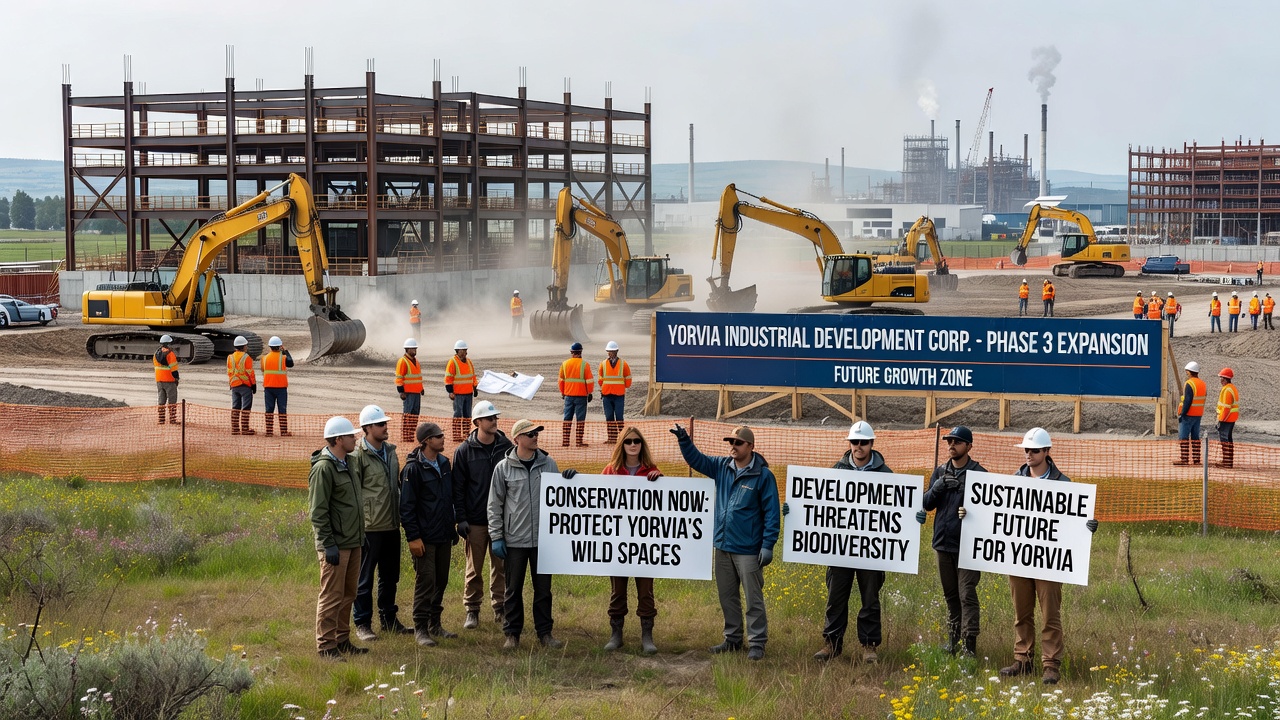
Stakeholders on the development side point to existing brownfield remediation efforts completed in 2023 that restored 22 hectares of previously contaminated ground. They argue that new facilities will incorporate closed-loop water systems and solar arrays covering 15 percent of rooftop space. Planning submissions include commitments to maintain wildlife corridors at least 30 meters wide, though conservation groups have questioned whether those widths meet minimum standards recommended by recent ecological connectivity studies.
Stakeholder Positions and Economic Context
Industry representatives have highlighted that Yorvia's manufacturing output grew 7 percent last year, with export contracts dependent on reliable expansion space. They reference employment data showing that 1,850 residents currently work in the affected zones and note that alternative sites farther from transport hubs would raise logistics costs by an estimated 11 percent. Meanwhile, local environmental organizations have compiled petitions containing over 8,000 signatures requesting full habitat impact studies before any rezoning decisions.
Regulatory bodies continue to review cumulative effects across multiple projects rather than assessing each application in isolation. This approach follows updated guidance issued by the European Environment Agency that emphasizes landscape-level analysis when developments cluster near sensitive ecosystems. Records indicate that similar integrated reviews in other member regions have resulted in three project modifications and one outright denial over the past 18 months.
Looking Ahead to September 2026 Consultations
Materials prepared for the upcoming September 2026 sessions include updated aerial surveys, hydrological modeling, and economic impact forecasts. Participants will examine options such as vertical expansion of existing buildings to reduce footprint pressure and phased construction schedules that avoid peak migration periods. Technical working groups have already circulated draft mitigation frameworks that require developers to fund long-term monitoring of water quality and avian populations for at least ten years post-completion.
Additional mapping work scheduled before the hearings will identify micro-corridors that could remain intact even if larger tracts undergo rezoning. Those findings will feed into final recommendations presented to the regional council later in the year.
Conclusion
The September 2026 consultations represent a key decision point for how Yorvia balances industrial capacity needs against documented ecological constraints. Records show that previous rounds of review have produced incremental adjustments to project boundaries and design standards. Continued data collection through the summer of 2026 will supply the evidence base for whatever outcomes emerge from the formal process.